

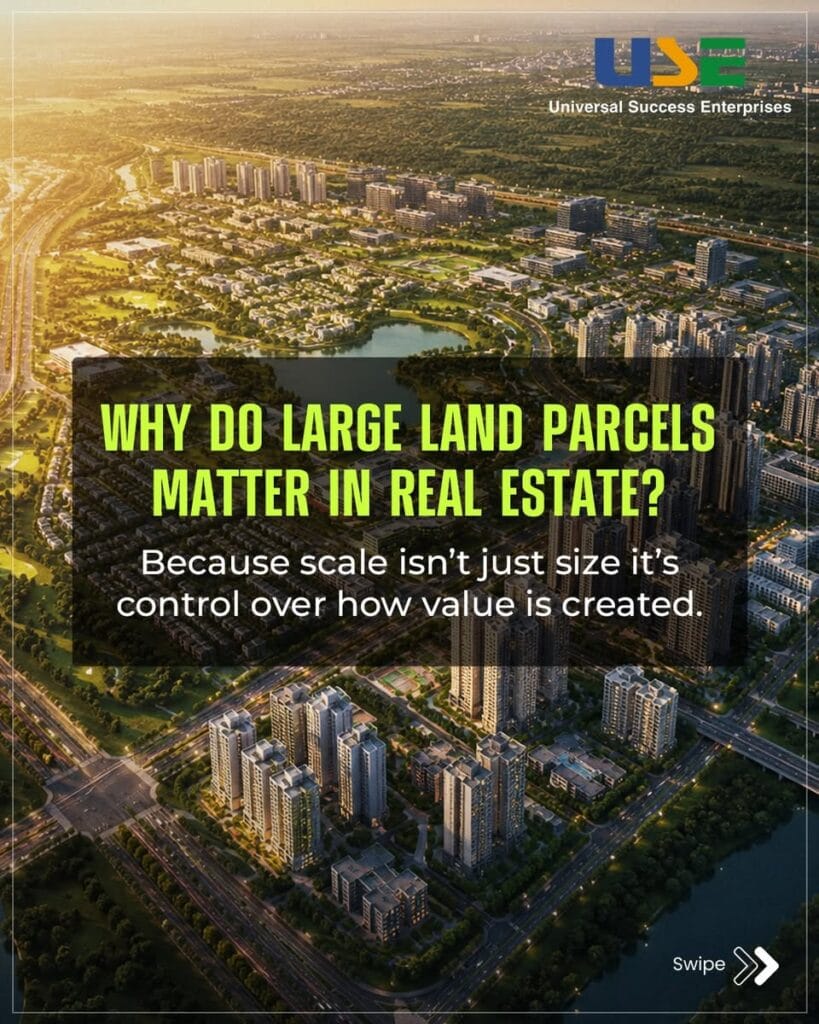
Real estate value does not grow in isolation. The strongest appreciation is often seen in locations where infrastructure, planning, connectivity, and scale come together to create a complete ecosystem. As urban landscapes evolve, buyers and investors are increasingly shifting their attention toward large, integrated developments that offer more than standalone buildings – they offer long-term vision.
The Importance of Scale in Urban Development
Large land parcels provide developers with something smaller projects often cannot—control over how an entire environment is designed and experienced. Instead of fragmented construction spread across disconnected locations, integrated developments allow for holistic planning.
This includes:
- Structured road networks
- Dedicated residential and commercial zones
- Open green spaces
- Lifestyle and social amenities
- Future infrastructure scalability
Scale creates the opportunity to design communities rather than simply construct properties.
Why Contiguous Land Parcels Matter
Contiguous developments enable smoother infrastructure integration and better urban functionality. When development happens within a unified master plan, everything works together more efficiently—from mobility and utilities to recreation and public spaces.
This results in:
- Better traffic management
- Improved accessibility
- More organised civic infrastructure
- Stronger long-term livability
Rather than isolated structures competing for limited infrastructure, integrated townships create self-sustaining ecosystems.
Integrated Infrastructure Drives Demand
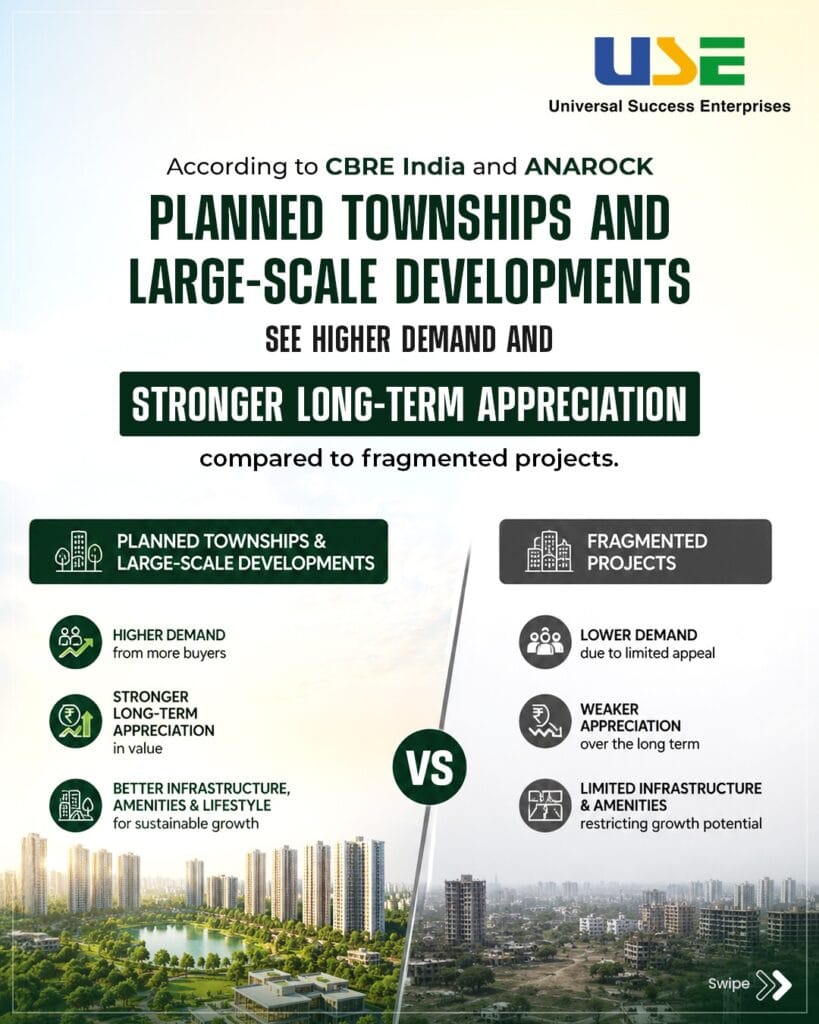
One of the key reasons planned townships outperform fragmented projects over time is infrastructure quality. Wide roads, organised layouts, utility planning, and social infrastructure significantly influence buyer preference and investor confidence.
According to industry observations by organisations such as CBRE India and ANAROCK, planned developments often witness:
- Higher buyer demand
- Stronger appreciation potential
- Better infrastructure retention
- Improved community living experience
As urban residents prioritise convenience and quality of life, integrated developments naturally become more desirable.
Lifestyle Is Now a Major Value Driver
Modern buyers are no longer investing solely in square footage—they are investing in lifestyle. Open spaces, wellness-focused environments, educational access, retail convenience, and recreational amenities now play a major role in real estate decisions.
Large-scale developments are better positioned to provide these experiences because they are planned with long-term community living in mind.
This creates stronger emotional and functional value for residents, which ultimately supports long-term appreciation.
The Advantage of Early Positioning
Real estate growth tends to accelerate where future infrastructure and urban expansion are already taking shape. Early investment in growth corridors allows buyers to benefit from:
- Lower entry pricing
- Infrastructure-led appreciation
- Expanding commercial activity
- Increasing residential demand
As the surrounding ecosystem develops, the value of integrated projects often strengthens considerably over time.
Kolkata West International City: Built on a Long-Term Vision
Kolkata West International City reflects this integrated development philosophy. Located within one of Kolkata’s emerging growth corridors, the township has been envisioned as a large-scale, future-ready ecosystem rather than a standalone residential project.
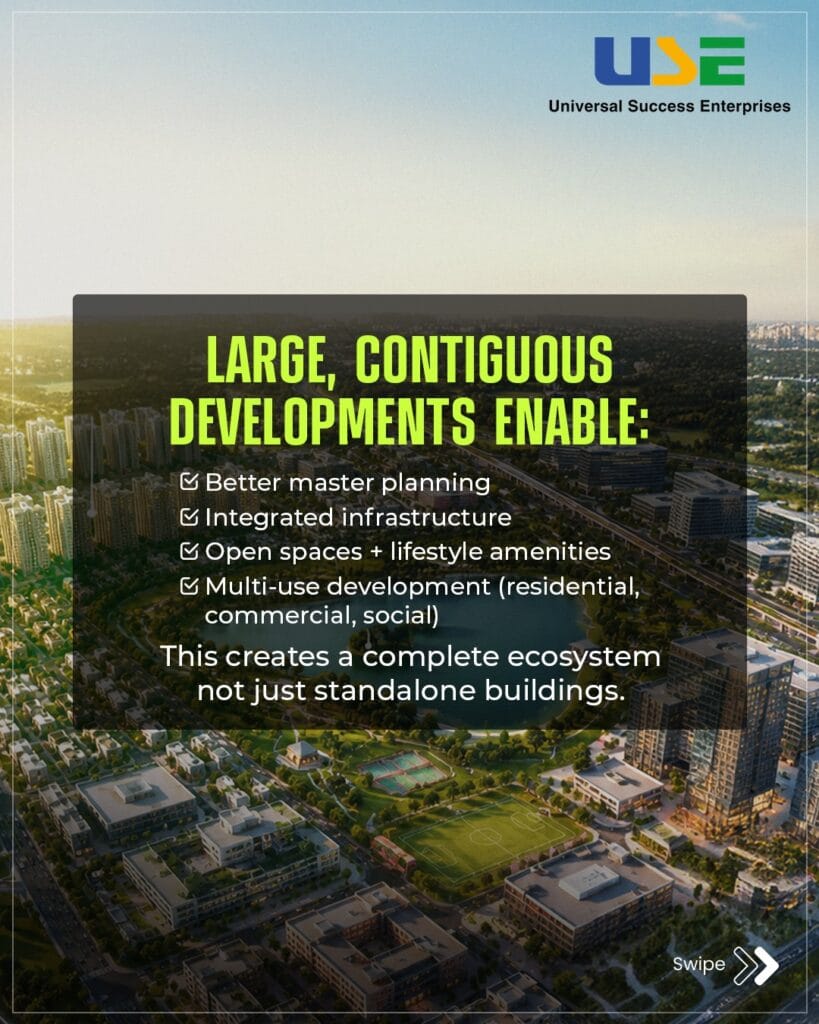
Its scale enables:
- Better master planning
- Integrated infrastructure
- Open spaces and lifestyle amenities
- Multi-use development potential
This creates an environment where residential, commercial, and social infrastructure can evolve together—supporting both lifestyle and long-term value creation.
The Future of Urban Growth
As cities continue to expand, fragmented development models will increasingly face limitations related to congestion, infrastructure strain, and inconsistent planning.
Large, integrated developments represent a more sustainable path forward—where urban growth is guided by planning, scalability, and livability rather than short-term expansion.
Real estate value grows strongest where planning, infrastructure, and scale work together. Integrated developments are not just reshaping skylines—they are redefining how future cities will function.
For investors and homebuyers alike, the opportunity lies not just in buying property, but in identifying ecosystems where future growth is already taking shape.